
Rio Putovanja
Trip catalogue and admin panel for a travel agency in Bosnia
- Client
- Rio Putovanja
- Year
- 2025
- Stack
- Next.js · Postgres · Vercel
- Language
- Bosnian
- Status
- In service
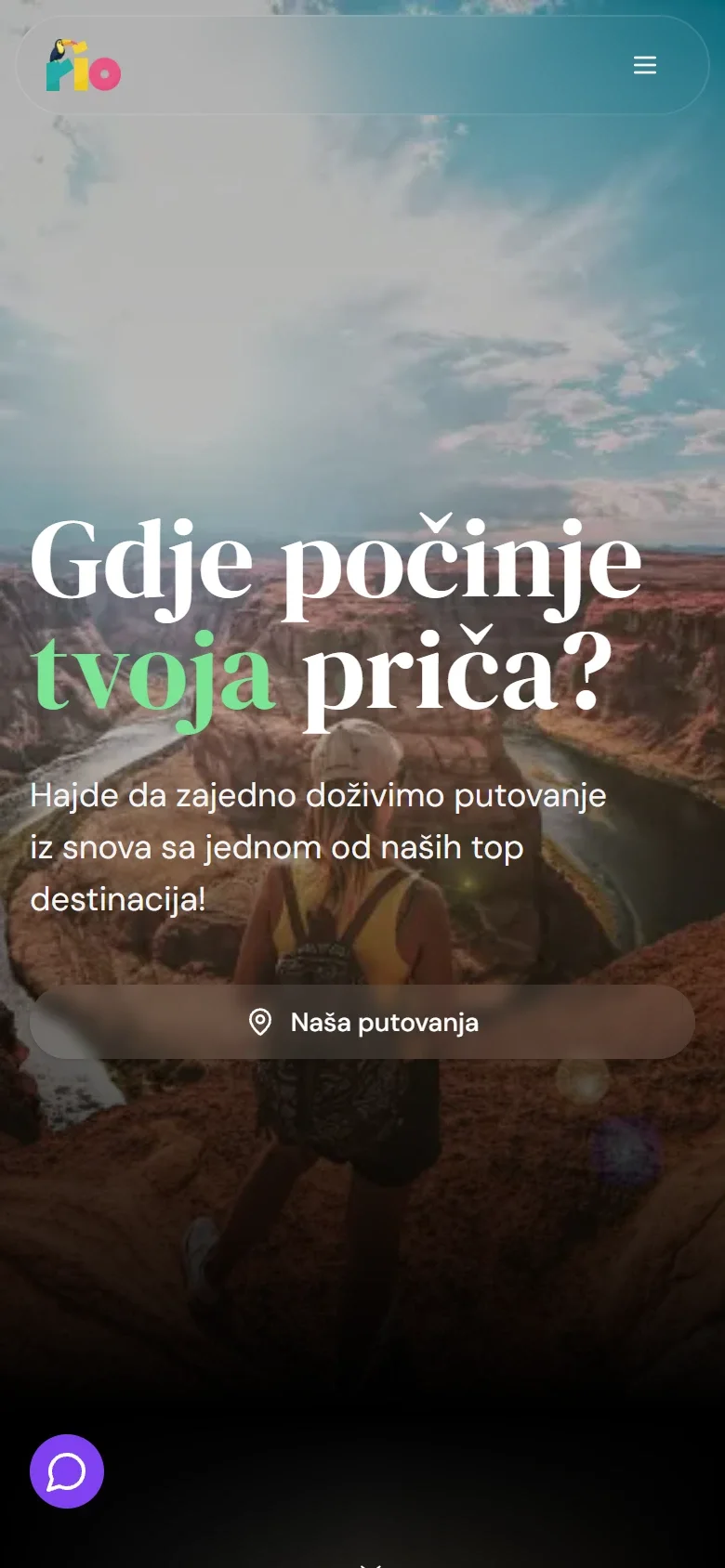
Home page
Departures are grouped the way the agency talks about them — running now, going later, sold out.
- Before
- A trip lived in four places: the programme in Word, the price in Excel, the post on Facebook, the bookings in email.
- After
- One record holds the trip. Change the date once and the page, catalogue card and booking total update automatically.

Departure page
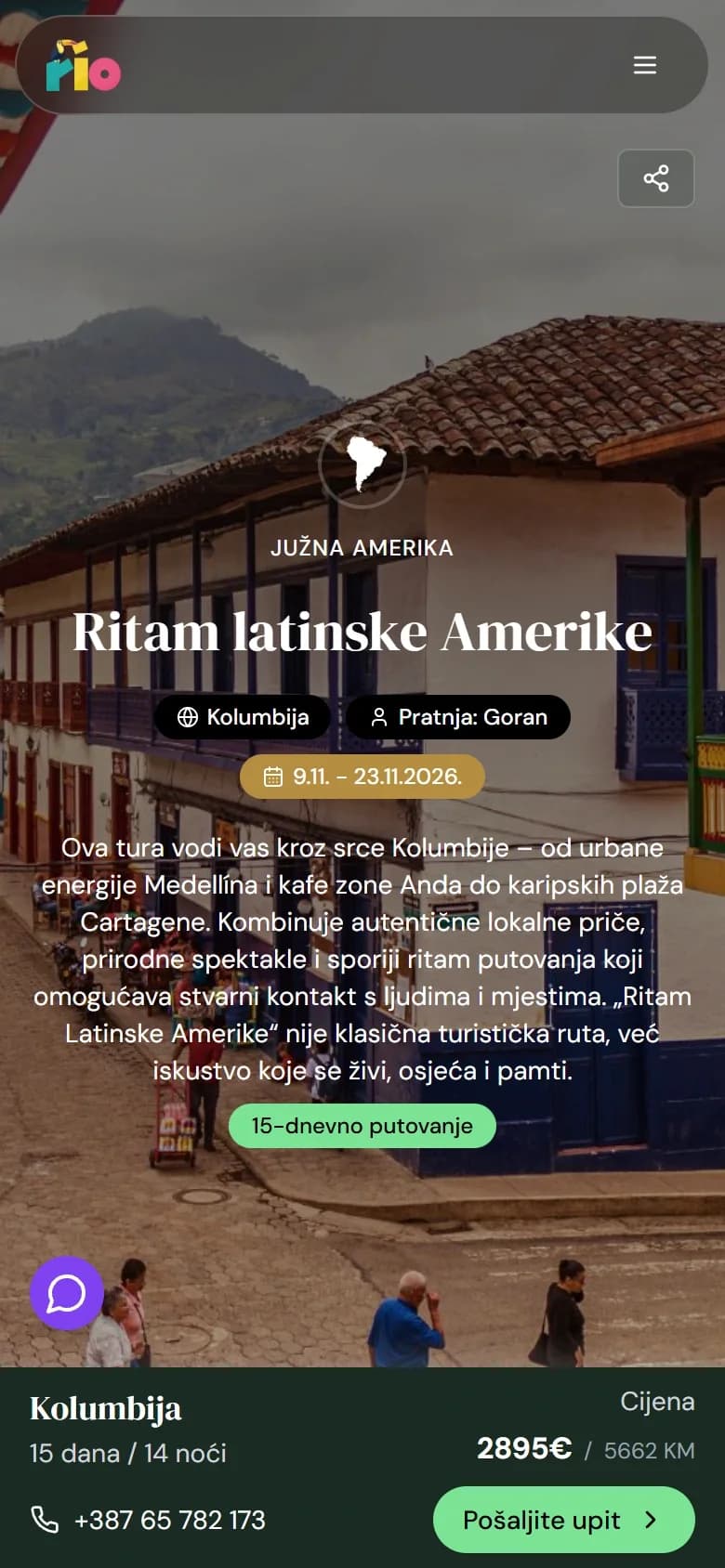
A departure here is a fortnight-long narrative, not a line item with a price on it.

Day by day
All days of the trip, each with its own details, description and photography.

Destination map
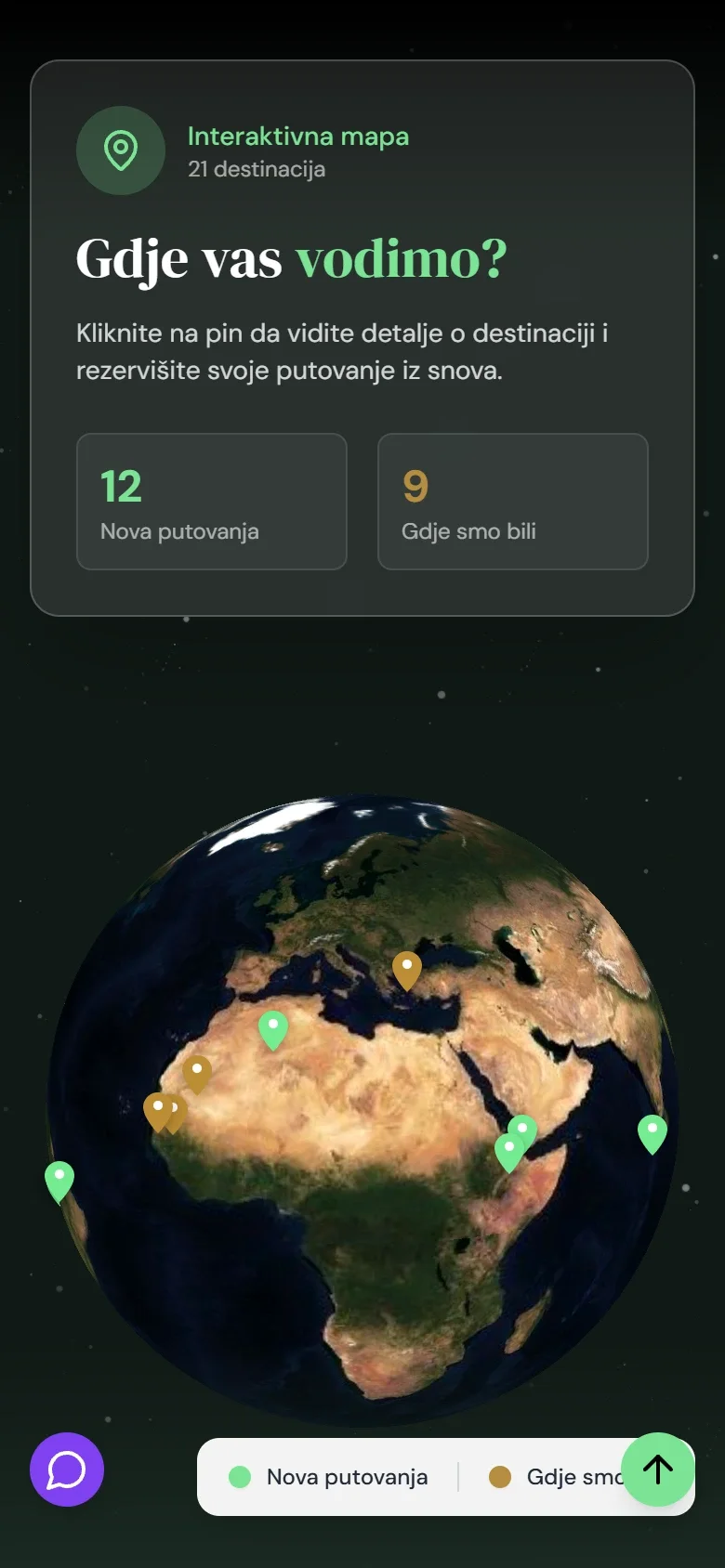
A globe with a pin on every destination, each one opening its trip.
The team can update all content without developer support.

Admin panel
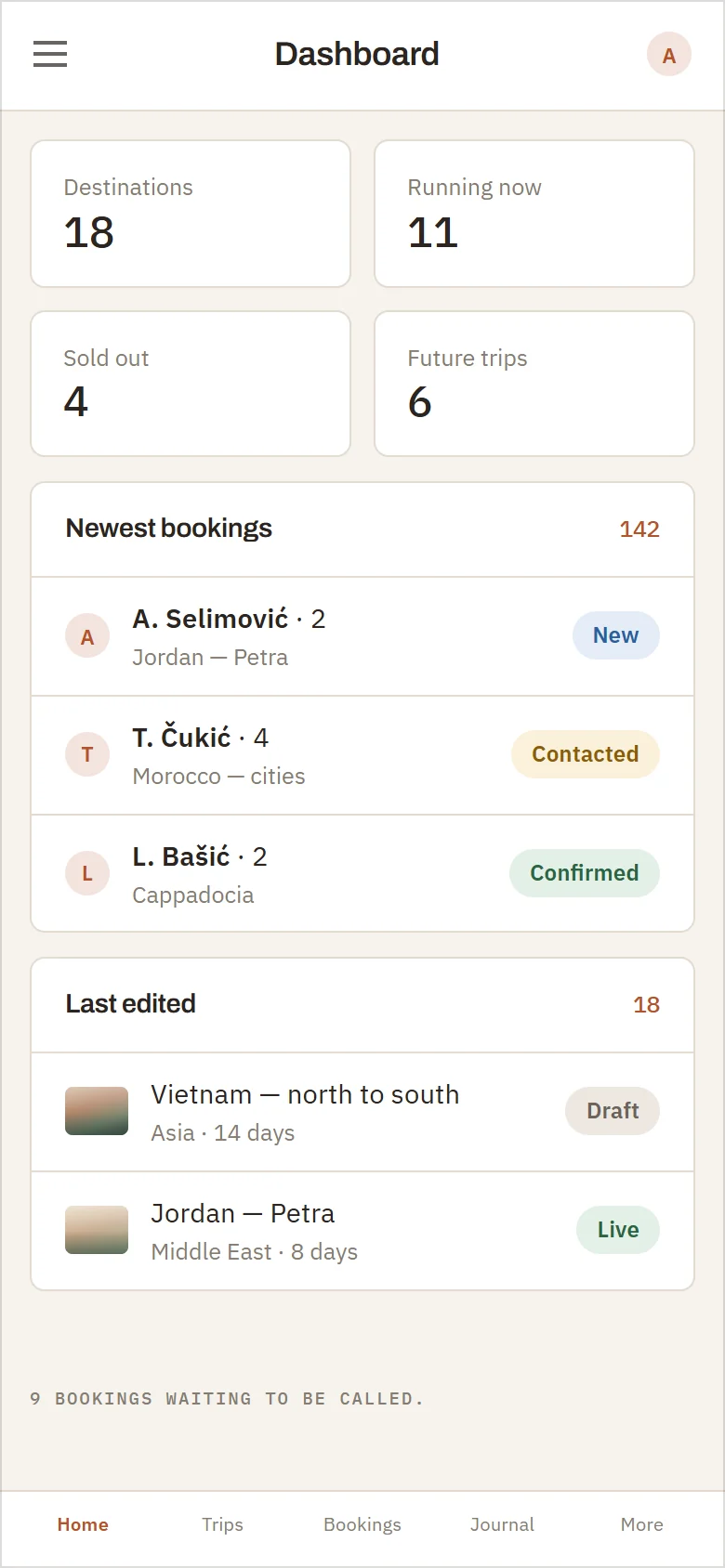
The dashboard shows the latest bookings, recently updated trips, and key catalogue statistics.

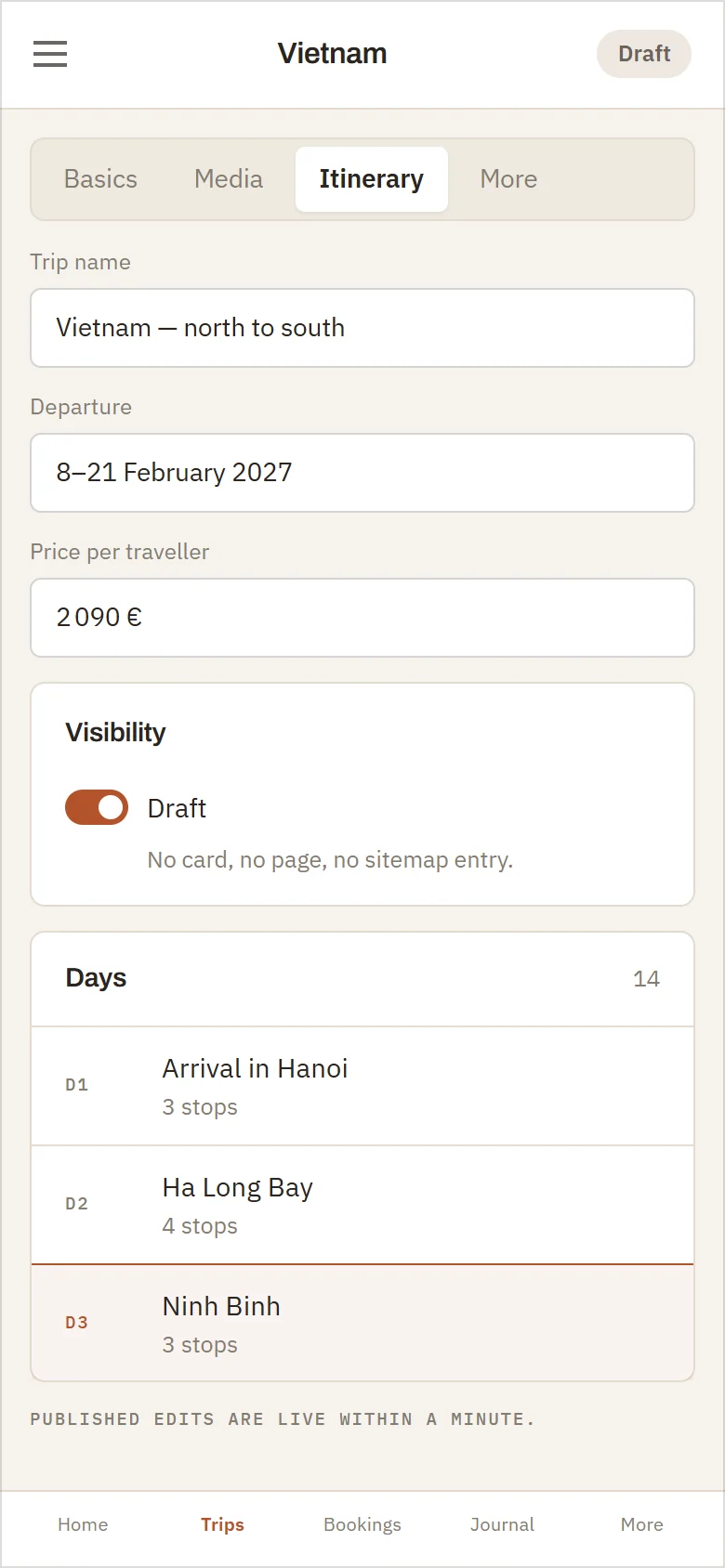
Trip editor
Each trip is managed across eight tabs. Draft trips are not visible on the website or included in the sitemap.

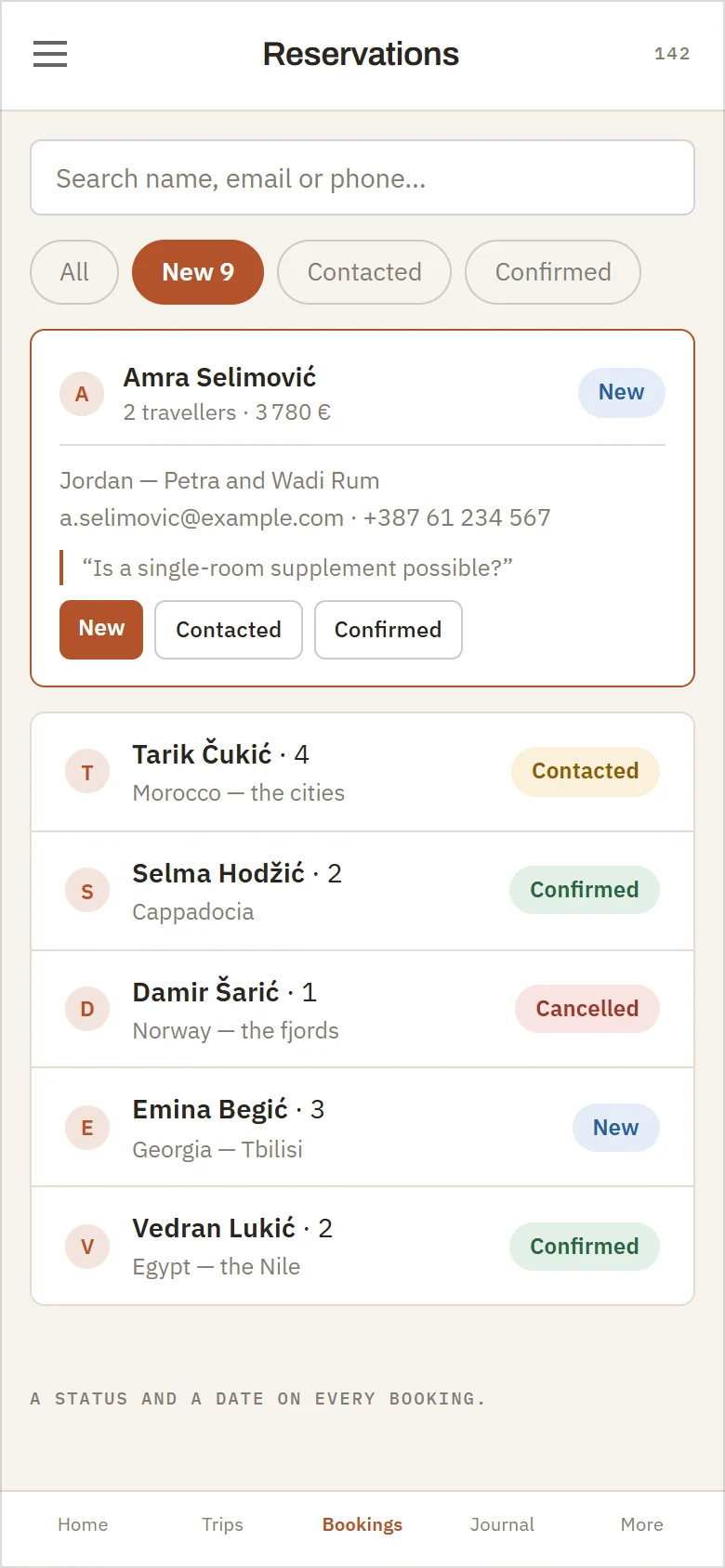
Reservations
Each request is assigned to one queue and has one status, preventing duplicate calls and missed requests.

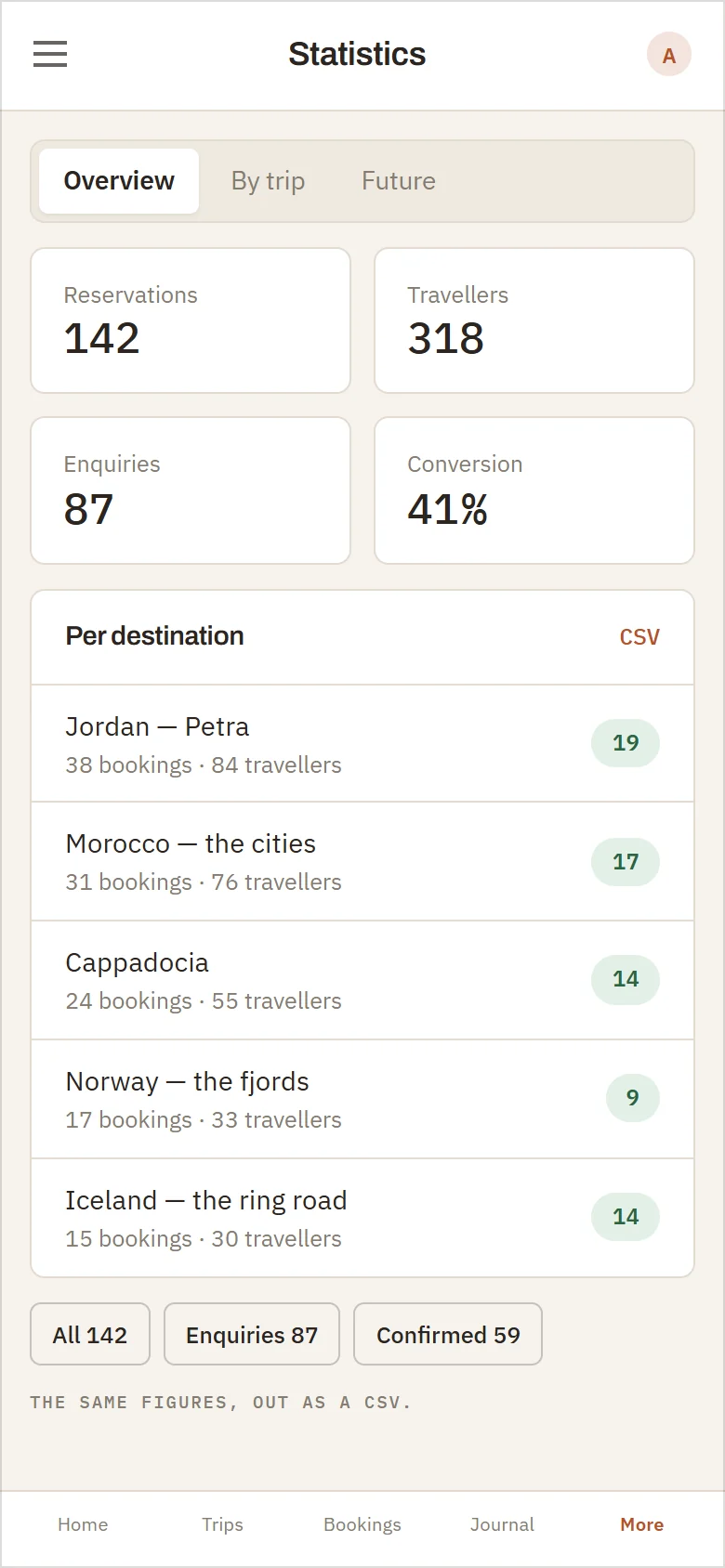
Statistics
View sales for each trip, broken down by status, and export the data as a CSV.
What was built.
- Departures
- A whole trip from one form: programme, guide, price, dates, capacity and status.
- Drafts
- A trip stays invisible until it is published: no card, no sitemap entry, no page.
- Addresses
- Rename a trip and the old link redirects for good, so shared links keep working.
- Bookings
- Every booking lands in one queue with the trip, the party size and a status.
- Statistics
- Reservations, travellers and conversion per trip, exportable as CSV.
- Blog
- The agency writes and publishes its own travel guides, filterable by continent and destination.
- Scope
- Domain, hosting, design, build, admin and deploy.
- Afterwards
- Still maintained: updates, patches and content edits when they need them.
From no site to selling out trips, run by the agency itself.